
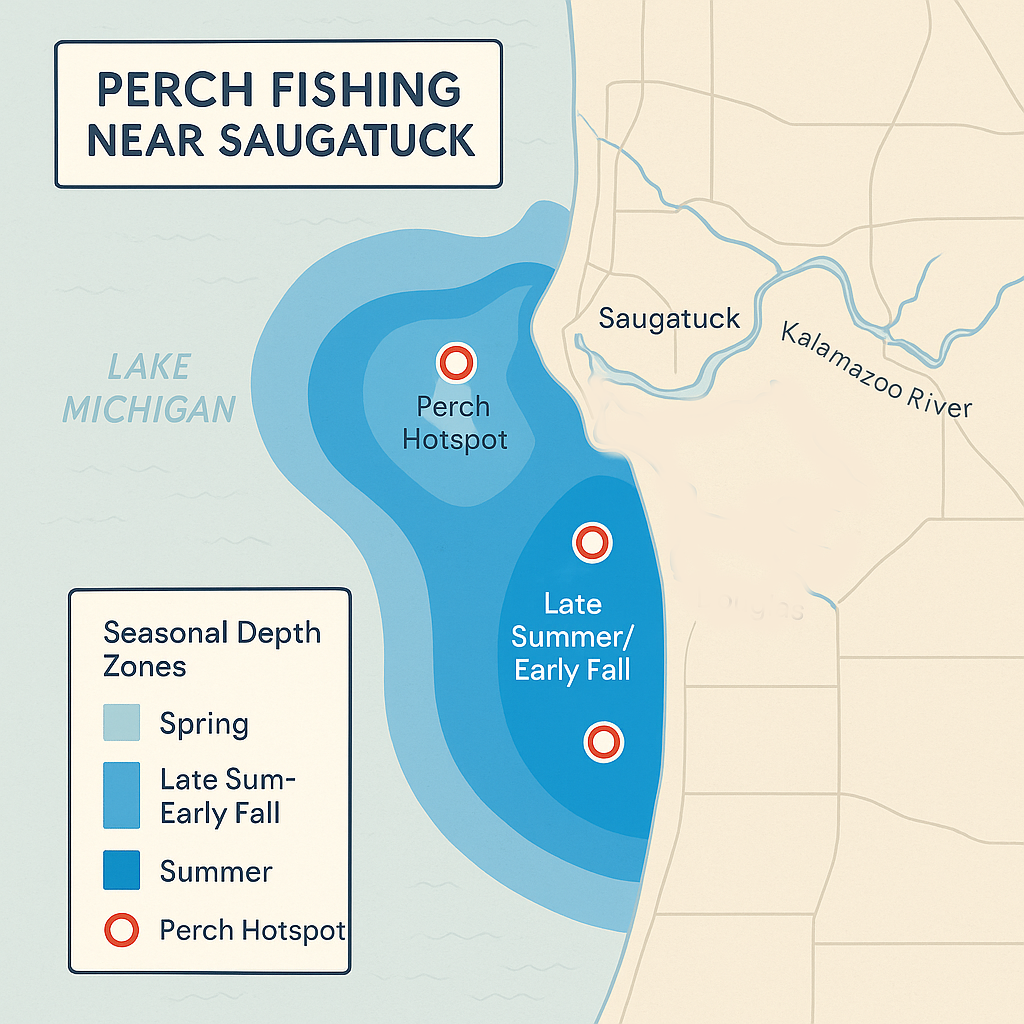
 Lake Michigan yellow perch are a beloved species for anglers of all skill levels, and the waters near Saugatuck, Michigan, offer some of the best opportunities to chase these tasty panfish. Whether you’re a seasoned angler or a first-timer on a charter, understanding when and where to find perch is the key to a successful day on the water.
This seasonal guide will walk you through the annual perch cycle near Saugatuck—highlighting when they’re biting, where they like to roam, how their habits shift through the year, and what to expect when you head out on a perch charter with us. We’ll focus especially on late summer and early fall, the golden window when big schools gather in nearshore waters and make for some of the best action of the season.
Why Perch Fishing is Popular Near Saugatuck
Before we dive into seasonal tactics, it’s worth mentioning why Lake Michigan perch fishing near Saugatuck is so appealing:
- Taste and table fare: Perch are widely regarded as one of the best-tasting freshwater fish.
- Action-packed outings: Perch often school up in large numbers, making it possible to catch dozens in a single trip.
- Family-friendly fishing: With light tackle and steady action, perch fishing is accessible for kids and beginners.
- Close-to-shore locations: Unlike deepwater salmon fishing, perch are often found within a few miles of the harbor, meaning more fishing time and less cruising.
Perch Habits on Lake Michigan: An Overview
Yellow perch are a schooling species that are always on the move in search of food and comfortable water conditions. They generally prefer cooler water, so their seasonal patterns are tied closely to water temperature, prey availability (like minnows, insects, and crustaceans), and spawning behavior.
Unlike salmon, perch aren’t migratory in the traditional sense. Instead, they roam between depths and structure types, following food and avoiding predators.
Here’s what their seasonal pattern near Saugatuck looks like.
Spring (April – May): Post-Spawn Transition
What They’re Doing
Perch spawn in early spring—often late March through April when water temps hit 45–50°F. During this time, they gather in shallower areas with gravel, rock, or vegetation to lay their long, gelatinous egg strands.
After spawning, they disperse slightly but remain relatively close to shore as the water continues to warm.
Where to Find Them
In April and early May, look for perch in:
- Nearshore flats (8–15 feet)
- Mouths of creeks or small rivers like the Kalamazoo River
- Weed beds or gravel-bottom areas
Early Summer (June – Early July): Scattered Schools
What They’re Doing
As the water warms to the 60s and 70s, perch start moving offshore to find cooler water and more abundant forage. They often suspend in the water column or roam the bottom in small pods.
This time of year can be hit-or-miss. Perch are more scattered and may be suspended at varying depths.
Where to Find Them
Early summer perch can be found:
- Deeper water: 20–40 feet
- Edges of drop-offs and underwater humps
- Over mixed sand and gravel bottom
Late Summer (Mid-July – August): The Bite Turns On
What They’re Doing
By mid-July, things start to stabilize. The thermocline (a layer of cooler water that forms below the warm surface layer) sets up offshore, and perch become more predictable. Large schools often form along the bottom near structure, and the bite becomes more consistent.
This is when our perch season really takes off. Late summer is one of the best times to book a perch charter out of Saugatuck.
Where to Find Them
You’ll find perch in:
- 20 to 40 feet of water
- Edges of reefs, rock piles, and submerged timber
- Shell beds and mixed gravel-bottom flats
Nearshore zones just south or north of the Saugatuck harbor, including areas off Douglas, Oval Beach, and along the southwest-facing shoreline, are hot zones.
Late summer mornings are particularly good, especially when the lake is calm. The fish tend to bite aggressively until about 11 AM, then taper off slightly in the afternoon.
Early Fall (September – Early October): Peak Perch Fishing
What They’re Doing
As September rolls around, perch fishing hits its peak. Cooling water brings perch back closer to shore, and schools often become even larger and more aggressive in their feeding.
They’re fattening up before winter and feeding heavily on minnows and insect larvae. The bite can be fast, furious, and incredibly rewarding.
Where to Find Them
The magic depth in early fall is often:
- 15–30 feet of water, closer than midsummer
- Off points, drop-offs, and weed edges
- Around structure like sunken wood, rocks, or break walls
The Saugatuck-Douglas shoreline is a prime perch zone this time of year. Flats near the pier heads and around the submerged ridges southwest of the port produce great numbers.
Late Fall to Winter (Mid-October – November): Slowing Down
What They’re Doing
As water temps drop into the 40s and below, perch behavior slows. They begin to move offshore again, often into 40+ feet of water and become more lethargic.
While some anglers still find them from shore or in the river mouth, the action is slower and less predictable.
Where to Find Them
In late fall, look for perch:
- In 40–60 feet of water
- Suspended over deep flats or off steep drop-offs
- Occasionally in river channels if bait is present
Why Late Summer and Fall Are the Best Times to Fish for Perch
If you’re wondering when to go fishing for perch are out of Saugatuck, here’s the short answer: late July through early October is the sweet spot. During this window:
- Perch are close to shore
- Schools are large and active
- The weather is stable and pleasant
- Fishing pressure is manageable
- The size and quality of the catch are top-notch
Perch fishing near Saugatuck is more than just a day on the lake—it’s a tradition. The calm waters of Lake Michigan, the excitement of finding a hungry school, and the reward of a fresh fish fry make it an unforgettable experience. The best part, you can do it on a calm day with most smaller boats and minimal equipment.
Each season offers its own charm, but late summer and early fall stand out as prime time for both numbers and size.