Behind the Scenes: A Day in the Life of a Saugatuck Salmon Charter Captain

When customers climb aboard my boat for a day of salmon fishing on Lake Michigan, they often bring with them a spirit of adventure, excitement, and curiosity. They’re ready to catch big kings or acrobatic cohos, and they’re eager to see the reels scream. But what they rarely see—what happens long before they arrive and long after they leave—is the heart and soul of this operation: the preparation, the planning, and the passion that keeps a salmon charter captain coming back, season after season.

Running a charter business out of the port of Saugatuck, Michigan, isn’t just about knowing where the fish are. It’s about building trust with customers, keeping gear in perfect working order, staying ahead of changing lake conditions, and creating a safe and unforgettable experience on the water. This post will give you a behind-the-scenes look at what it’s like to live this life—from the crack of dawn to the cleaning of the day’s catch.

The Alarm Clock: Early Mornings and Coffee-Fueled Focus

The day starts early—really early. During peak salmon season, I’m often up around 3:30 or 4:00 a.m. The lake is calmest at dawn, and the salmon bite best in those low-light hours, so we want lines in the water at first light.

Before anything else, I check the latest weather forecasts. I’m monitoring wind speed and direction, wave height, radar, and marine advisories. The big lake is a living thing, and it can turn on a dime. I use a combination of NOAA tools, wind prediction apps, and my own local knowledge of how certain conditions behave near Saugatuck.

While the coffee brews, I pull up my catch logs from the past week. Where were the fish hitting yesterday? What depths? What lures produced? I’m looking for patterns that will help us dial in today’s presentation. Every trip is a puzzle, and part of the job is solving it before the boat even leaves the dock.

Tackle Time: Rigging Rods, Reels, and Riggers

Before my crew or customers arrive, I’m at the boat prepping rods. A typical trip involves 12 to 16 lines in the water, each with a different presentation. That means rigging downriggers, wire divers, leadcore, copper lines, and planer boards with a spread of spoons, plugs, and meat rigs.

This is the part customers often don’t realize—every rod is custom-tuned for the depth and action I want. I check knots, retie leaders, sharpen hooks, and inspect every snap swivel. A bad connection can cost a customer the fish of a lifetime.

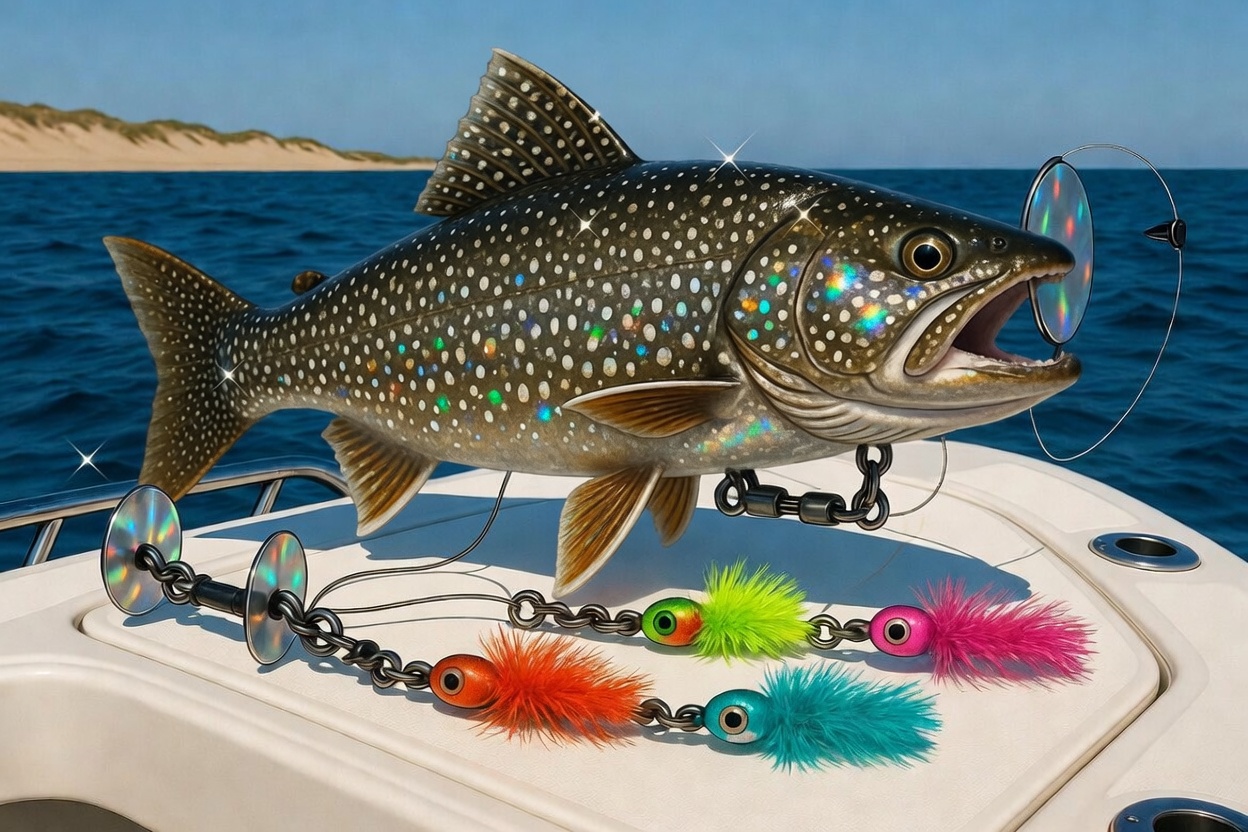
Lure choice depends on a combination of season, water temperature, depth, and what the fish were hitting yesterday. In spring, I may run more bright-colored spoons and flasher-fly combos. Come summer, we’re trolling meat rigs deep in cold water for mature kings. And I always make sure to include a few wildcards—something off the wall the fish haven’t seen.

Boat Prep: Safety, Sanitation, and Systems Check

Before customers step aboard, I do a full systems check. That means verifying the GPS and sonar are working properly, testing the bilge pump, topping off fuel, and double-checking the life jackets, fire extinguishers, and safety gear.

I also clean the boat—yes, even at 5:00 a.m. A clean deck is safer and more enjoyable for everyone. The cooler is packed with ice for the day’s catch, the bait cooler is stocked, and drinks are loaded up.

Running a charter isn’t just about catching fish—it’s about creating a professional experience. Whether it’s a family bringing their kids out for their first time on the big lake or a group of seasoned anglers looking to fill the box, I want everyone to feel like they’re in good hands.

Showtime: Greeting the Crew and Heading Out

By 5:30 or 6:00 a.m., the crew and customers arrive. I introduce myself, give a briefing on safety, explain how we’ll fish today, and make sure everyone knows what to expect. We head out of the Saugatuck harbor, often under a cotton-candy sky, and make our way into the open lake.

As we set lines, I explain what we’re doing and why. For first-timers, I walk them through the basics of trolling, how to watch the rods for a bite, and what to do when we get hooked up. For more experienced anglers, I might hand off a rod and let them help set lines.

And then… we wait.

But it’s not really waiting. It’s adjusting. I’m watching the sonar for bait balls and marks. I’m tweaking depths, swapping lures, changing speeds, and adjusting trolling angles based on wind and current. Every detail matters.

When a rod finally pops and a salmon rips line off the reel, the whole boat comes alive. I coach the angler through the fight and net the fish when it surfaces. There’s nothing better than seeing someone reel in their first king salmon—especially a kid who can barely lift the rod.

Adapting on the Fly: Weather and Water Changes

One of the biggest challenges—and joys—of this job is reading the water. Salmon don’t sit still. They move with temperature, current, and bait. A spot that was red hot yesterday might be empty today.

That means I’m constantly adapting on the fly. If the wind shifts and cold water moves in, I might have to run 5 or 10 miles to find better conditions. If the surface bite dies, I drop rigs deeper. If spoons stop producing, I swap to flies or meat.

I’m also keeping an eye on the weather all day. Thunderstorms can build fast, and if I see something I don’t like, we head back early. The safety of my customers always comes first.

Teaching Moments: Sharing Knowledge on the Water

Part of what keeps me passionate about charter fishing is the chance to teach. I love showing customers how to read a sonar screen, what different lure patterns mean, or why we’re running certain lines at certain depths.

Families with kids are especially fun. Watching a child reel in a salmon that’s bigger than they are, or teaching them how to net a fish, is incredibly rewarding. It’s not just a trip—it’s a memory they’ll keep for life.

For more seasoned anglers, I enjoy talking gear, comparing notes, and getting nerdy about flasher styles or spoon finishes. Many return clients treat the trip as both a fun day and a chance to up their own game.

The Return: Cleaning Fish and Stories Shared

After a successful morning, we head back to the dock. As customers relax and snap photos with their catch, I fire up the cleaning station.

Cleaning fish is an art—and also a labor of love. I fillet each salmon with care, remove pin bones, and package the fillets for customers to take home. I give tips on how to cook the fish, whether grilled, smoked, or made into salmon patties.

Customers often hang around, talking about the biggest fish of the day or already planning their next trip. That post-trip camaraderie is something special—part of the charter culture that makes this work so fulfilling.

After Hours: Maintenance, Restocking, and Planning Tomorrow

Once the customers leave, the day isn’t over—not by a long shot. I clean the boat, spray down the deck, wash blood off the coolers, and organize the rods. I restock tackle, refill bait, and charge batteries.

Then it’s time for logbook entries. I record what worked, where we fished, water temps, wind, depths, and catches. This log becomes invaluable over time—helping me predict patterns and plan smarter trips.

In the evening, I may tie leaders, replace rusty hooks, or respool a reel. On slower nights, I’ll take time to unwind—maybe fire up the grill, enjoy a cold beer, and swap stories with other captains.

The Why: Passion, Persistence, and the Pull of the Lake

People often ask me, “Don’t you ever get tired of doing this every day?”

The truth? Never.

Yes, it’s hard work. Yes, it’s long hours and a physical grind. But there’s something about Lake Michigan that gets into your blood. The way the water glows at sunrise. The adrenaline when three rods go off at once. The joy of handing a kid his first salmon.

Charter fishing is a business—but it’s also a calling. It’s about sharing a passion, building relationships, and giving people an experience they’ll never forget.

Each trip is different, and each one is a chance to learn something new. No matter how many years I’ve been doing it, I still feel a rush when the first rod bends. That’s what keeps me coming back.

What This Means for You, the Customer

So what does all this mean for you when you book a charter out of Saugatuck?

It means you’re not just getting a ride on a boat. You’re getting the benefit of hours of preparation, a lifetime of experience, and a deep respect for the lake and its fish.

It means every lure in the spread was chosen with care. Every rod was rigged with intention. Every decision made on the water was for one reason: to give you the best possible shot at a great day.

So when you step on board, know that I’ve already been hard at work—so you can just focus on the fun, the fight, and the fish.

Ready to Fish?

If you’re thinking about booking a salmon charter out of Saugatuck, I’d love to have you aboard. Whether you’re new to fishing or a seasoned angler, this lake has something incredible to offer—and I’d be honored to show it to you.

Bring your excitement. Bring your curiosity. And let’s go make some memories.

Tight lines, Captain Mike.

Thermoclines and Salmon: How Water Temperature Affects Trolling Success

If you’ve ever been on a Lake Michigan salmon charter out of the Port of Saugatuck and wondered how we seem to “know” where the fish are, you’re not alone. Our success isn’t just good luck—it’s part experience, part technology, and a whole lot of understanding how salmon behave in their underwater world. One of the most important factors? Water temperature, and more specifically, something called the thermocline.

In this post, we’re going to dive deep (pun intended) into what a thermocline is, why it’s the salmon’s preferred hangout zone, and how we find it and fish it effectively. Understanding this will help you get a clearer picture of how the fishing process works on your charter and why we troll where we do.

What Is a Thermocline?

In simplest terms, a thermocline is a distinct layer in the water column where the temperature changes rapidly with depth. On Lake Michigan, especially in the summer months, the lake stratifies into three layers:

  1. Epilimnion – The warm, upper layer of water, usually from the surface to about 30 to 50 feet deep.
  2. Thermocline – A narrow band below the surface where the water temperature drops sharply over just a few feet of depth.
  3. Hypolimnion – The cold, deep water below the thermocline that remains relatively stable in temperature.

While the surface of the lake might feel warm and inviting on a sunny July day, just 50 or 60 feet down it can be a different story entirely—colder and more oxygen-rich. That sharp boundary between warm and cold water is the thermocline, and for a salmon, it’s the perfect sweet spot.

Why Salmon Love the Thermocline

Chinook, coho, steelhead, and lake trout—some of our favorite targets on a Lake Michigan charter—are all cold-water fish. They don’t love the balmy temperatures up top, especially in the middle of summer when surface temps can climb into the 70s or even low 80s. But that doesn’t mean they’re always hiding in the deep, cold abyss either. They need a balance.

That’s where the thermocline comes in. It provides:

  • Cool, comfortable water temperatures (generally between 45°F and 55°F, depending on species preference)
  • Adequate oxygen levels
  • Abundant baitfish, which also congregate around the thermocline because it’s a stable environment for their own survival

Because of this, salmon tend to stack along the thermocline, moving horizontally more than vertically. It becomes a buffet line of sorts, and once we find it, we can focus our trolling depth and techniques to intercept them.

How We Find the Thermocline

This is where the science meets the art. While years of fishing experience give us a good instinct for where the thermocline should be based on the season and weather patterns, we don’t just rely on gut feeling. We use sonar and fish-finding electronics to dial it in.

Sonar Readings

Many modern fish finders allow us to see temperature profiles as well as sonar returns. A sharp temperature break in the water column will show up as a distinct line—sometimes as a fuzzy band on the sonar screen, where plankton and baitfish collect.

Temperature Probes (Downrigger Thermometers)

We often use specialized devices like the Fish Hawk X4D or Smart Troll sensors. These send live temperature and depth data from our downrigger ball directly to a display at the helm. This helps us map the exact depth where the ideal temperature begins and ends—often right in the thermocline.

Speed and Current Monitoring

The thermocline can also act as a boundary between layers of water moving at different speeds. Tools like the Fish Hawk also tell us trolling speed at depth—not just at the surface. This helps us maintain the ideal presentation speed even when the current below is doing something totally different.

Adjusting Trolling Depth for Success

Once we’ve located the thermocline, we tailor our trolling setup to work that layer as efficiently as possible. Here’s how:

Matching Depth with Downriggers

Downriggers are our precision tools. We’ll set lures to run right at or just above the thermocline—typically between 40 and 80 feet down during the height of summer. Salmon usually feed upward, so running lures just above them increases our chance of triggering a strike.

Divers and Lead Core

Dipsy divers and lead core lines (like 5-color or 10-color setups) are also used to target the thermocline without a downrigger. We choose these based on how far behind the boat we want to run the lure and how deep we want it to go. Our knowledge of sink rates and trolling speed lets us fine-tune where our lures track.

Staggering Baits Across the Layer

Rather than putting all our lines at the same depth, we’ll stagger them—some just above the thermocline, some right in it, and occasionally one just below it. This allows us to see what depth is producing the most action and adjust accordingly.

Watching the Rods Closely

When a certain line starts producing consistently—say the downrigger set at 55 feet—we’ll adjust others to that depth. Salmon often school tightly along that magic zone. Once you find their level, staying on it is key to a hot bite.

What You’ll Experience on Your Charter

As a customer aboard one of our Lake Michigan salmon charters out of Saugatuck, you’ll see this process in action from the moment we leave the harbor.

  • Electronics on full display: We’ll be reading sonar and temperature graphs to find the thermocline, often talking you through what we’re seeing.
  • Precision setup: You’ll watch as we carefully set each line to target specific depths, using a mix of downriggers, lead core, copper, and divers.
  • Tuning the spread: Throughout the trip, we adjust based on what the fish are telling us—sometimes that means changing lures, depths, or speeds to keep up with their behavior.
  • Hands-on action: When a rod goes off (that sudden zing of the drag is unforgettable), you’ll be front and center battling one of the lake’s apex predators.

Seasonal Changes in the Thermocline

While the thermocline is a dominant factor in summer salmon fishing, it doesn’t stay the same all year. Here’s how it changes and how we adjust:

  • Spring (May-June): The lake is just starting to stratify. Salmon can be scattered and often closer to shore. The thermocline is forming but isn’t deep yet—often in the 20–40 ft range.
  • Summer (July-August): Peak thermocline season. You’ll find the thermocline consistently around 40–80 feet. This is prime time for deep trolling.
  • Late Summer/Fall (September): As salmon begin staging to run up rivers, they often leave the comfort of the thermocline. Water begins to cool and mix, and the thermocline breaks down by late September.

Knowing these seasonal transitions is part of what makes a successful charter operator. We’re constantly adjusting our strategy to match conditions—and the fish’s behavior.

Why This Matters to Your Fishing Experience

Understanding the role of the thermocline helps explain a few things you’ll notice on your trip:

  • Why we’re trolling “out in the middle of nowhere” — Because we’re chasing temperature bands and bait concentrations, not landmarks.
  • Why the rods are set at such precise depths — It’s not random; each line is targeting the thermocline in a specific way.
  • Why we might change lures or positions during the trip — The thermocline shifts with wind, current, and weather. We follow it to stay in the action.

Ultimately, the thermocline is one of our best tools for putting you on fish. It’s where salmon feel comfortable, it’s where they eat, and it’s where we catch them.

Ready to Fish the Thermocline?

If this blog has sparked your interest, why not come experience it firsthand? When you book a salmon fishing charter out of Saugatuck with us, you’re not just going for a boat ride—you’re getting an inside look at the science and strategy behind successful trolling.

From high-tech gear to old-school intuition, we use every tool at our disposal to find that magic line in the lake—and get you hooked up with some of the best freshwater sportfishing in the world.

Tight lines, and we’ll see you on the water!

Prepping for Your First Salmon Charter: What to Bring, Expect, and Ask

If you’re dreaming of reeling in a trophy salmon on the beautiful waters of Lake Michigan, booking your first salmon charter out of Saugatuck is an experience you’ll never forget. Whether you’re an angling novice or a seasoned fisherman trying salmon for the first time, preparing properly can make all the difference between an incredible day on the water and a frustrating one.

This guide will walk you through everything you need to know before stepping on board — from essential gear and licenses to what a typical charter day looks like and the best questions to ask your captain. Read on to get ready for the ultimate Lake Michigan salmon adventure!

Why Choose a Salmon Charter Out of Saugatuck?

Saugatuck is one of the top launching points on Lake Michigan for salmon fishing, thanks to its access to deep water, abundant salmon runs, and knowledgeable charter captains. Salmon species you’ll likely target include Chinook (King), Coho, and sometimes Steelhead or Lake Trout, all prized for their strength and delicious taste.

Charters provide a turnkey experience where the boat, equipment, bait, and expertise are all included, making it easy and fun for anglers of all skill levels. But the best results come from being prepared and knowing what to expect.

What to Bring: The Essential Salmon Charter Checklist

1. Fishing License

Before you cast a line, you’ll need a valid Michigan fishing license. These can be purchased online through the Michigan Department of Natural Resources website or at local tackle shops and sporting goods stores in Saugatuck.

  • Resident license: Available if you live in Michigan.
  • Non-resident license: Needed for visitors.
  • Salmon stamp: Required for salmon and trout fishing in Michigan waters.

Make sure to carry your license with you on the boat as it’s required by law and may be checked by the captain or DNR officers. You can do this on the DNR app now.

2. Clothing and Footwear

Lake Michigan weather can be unpredictable, and the temperature on the water often feels cooler than on land, especially early or late in the season. Dressing in layers is key.

  • Waterproof jacket: A breathable rain jacket or foul weather gear helps keep you dry from spray or sudden showers.
  • Layered clothing: T-shirts, fleece, or thermal shirts depending on the season. Early spring and fall can be chilly.
  • Hat and sunglasses: A baseball cap or wide-brim hat protects from sun glare. Polarized sunglasses reduce surface glare and help you see fish beneath the water.
  • Gloves: Lightweight fishing gloves protect your hands from the cold, line cuts, and fish teeth.
  • Non-slip shoes: Boat decks can be wet and slippery. Closed-toe shoes with good grip or waterproof boots are ideal.
  • Sunscreen and lip balm: Even on cloudy days, UV rays reflect off the water.

3. Gear and Tackle

Most charter boats provide rods, reels, tackle, and bait, especially for first-timers. But if you prefer to bring your own gear or want to be prepared, consider these items:

  • Rod and reel combo: Medium-heavy spinning or conventional setups rated for 10-20 lb line.
  • Line: 12-20 lb test monofilament or braided line with fluorocarbon leader.
  • Lures and bait: Common salmon lures include spoons, hoochies, flashers, and plugs. Some anglers also bring cut bait or roe.
  • Pliers or line cutters: For hook removal and line management.
  • Fishing license holder or waterproof case: To keep your license dry.
  • Camera or smartphone: For photos of your catch.
  • Cooler or fish bag: Many charters provide fish storage but check in advance.

If you’re renting gear or using the charter’s equipment, confirm with your captain what they provide so you don’t overpack.

4. Personal Items

  • Snacks and water: Bring some snacks and plenty of water to stay energized and hydrated during the trip.
  • Motion sickness remedy: If you’re prone to seasickness, bring medication or ginger chews.
  • Cash or tip: It’s customary to tip your captain and crew for great service (15-20%).

What to Expect on a Typical Salmon Charter

Boarding and Safety Briefing

Your charter day typically starts early, often around dawn or just before, when salmon are most active. When you arrive at the dock in Saugatuck, your captain will greet you and go over safety procedures, boat layout, and basic fishing instructions. Don’t hesitate to ask any safety or boat-related questions.

Heading Out Fishing

The captain will navigate to the prime salmon spots based on the season, weather, and fish activity. Lake Michigan is vast, and the best salmon fishing can be miles offshore where the water depth and temperature suit the salmon’s preferences.

You’ll usually troll — that means dragging lines with lures or bait behind the boat at controlled speeds — which is the most effective way to catch salmon in Lake Michigan.

Setting Up and Fishing

Once in the water we want to troll in, the crew will help set up your lines and explain how to troll, how to set the hook when you get a bite, and how to manage the fight when you hook a fish. This can be thrilling for beginners and a great refresher for experienced anglers.

Expect to learn about:

  • How to tell when a fish bites.
  • When and how to set the hook.
  • Techniques to keep steady pressure without breaking the line.
  • How to work with the boat’s movement to tire the fish.

Fighting and Landing Your Salmon

Once you hook a salmon, the real fun begins. Salmon are strong fighters and can make long runs or jump out of the water. Your captain and crew will assist in guiding you through the fight and safely landing the fish with nets or gaffs.

The crew usually helps with de-hooking and fish handling to minimize stress on the fish and ensure your catch is well cared for.

Keeping or Releasing Fish

Depending on your preference or if the fish can be released yet (many cannot be when caught from deeper depths). Many charters offer cleaning and filleting services so you can take fresh salmon home.

Return to the Dock and Wrap-Up

After several hours on the water (usually 4-6 hours for half-day charters, longer for full-day trips), you’ll head back to the dock. The captain will review the day, share any tips for next time, and you can talk about your catch and experience.

Smart Questions to Ask Your Charter Captain

Asking good questions helps you learn more about salmon fishing and makes your trip more enjoyable. Here are a few to keep in mind while on board:

1. “How do you decide where to fish on any given day?”

This opens a window into the captain’s knowledge of Lake Michigan’s salmon patterns, water temperature, baitfish locations, and weather conditions.

2. “What’s the best way to set the hook on a salmon bite?”

Every species and fishing method can require a different hooking technique. Learning from the pros helps ensure you don’t lose a big one.

3. “How should I play the fish once it’s hooked?”

Ask about proper rod positioning, reeling speed, and how to manage the fish’s runs without snapping the line.

4. “What’s your favorite time of day or season for salmon fishing here?”

Captains often have insights on the best times based on years of experience and can recommend when to book your next trip.

5. “What are the regulations I should know about regarding catch limits and size?”

Always good to confirm you’re fishing within Michigan’s legal limits and ethical practices. Your captain will help with this based on how many people are fishing who have licenses.

6. “Do you have tips for preparing salmon once I take it home?”

Most captains love sharing recipes or filleting tips to make the most of your catch.

Final Tips for a Successful Salmon Charter Trip

  • Arrive early to get checked in and listen carefully during the safety briefing.
  • Listen to your captain and crew—they’re experts and want you to have the best experience.
  • Be patient and have fun — sometimes the fish bite fast, sometimes it’s a waiting game.
  • Stay hydrated and protect yourself from the sun—even on cloudy days.
  • Bring a camera — you’ll want photos of your trophy salmon and the beautiful Lake Michigan scenery.

Sample Salmon Charter Packing Checklist

Item Notes
Valid Michigan Fishing License Don’t forget your salmon stamp!
Waterproof jacket or foul weather gear Essential for changing weather
Layered clothing T-shirt, fleece, or thermal layers
Polarized sunglasses Cuts glare and protects eyes
Hat Baseball cap or wide brim for sun protection
Non-slip shoes or boots For safety on wet boat decks
Fishing gloves Protect hands from line and teeth
Sunscreen and lip balm UV protection
Personal fishing gear (optional) Rod, reel, lures, pliers
Snacks and bottled water Stay energized and hydrated
Motion sickness remedies If prone to seasickness
Camera or smartphone For photos
Cooler or fish bag Check if the charter provides
Cash or card For tipping and any extras


Ready to Book Your Saugatuck Salmon Charter?

Fishing for salmon on Lake Michigan is a thrilling and rewarding experience, and being prepared can make your first charter smooth, safe, and a whole lot of fun. Whether you’re a beginner or just new to salmon, the knowledgeable captains and crew at Saugatuck charters will guide you every step of the way.

Pack smart, show up eager to learn, and get ready to make memories — and maybe even land that monster king salmon you’ve been dreaming of!

If you have any questions or want recommendations for specific charters out of Saugatuck, feel free to reach out. Tight lines and happy fishing!

Would you like me to create a printable or downloadable version of this checklist or add any other details like local lodging or gear shops?

Understanding the Fish Finder: The Basics

A modern fish finder uses sonar (sound navigation and ranging) technology to send sound waves downward into the water. When these sound waves hit something—like a fish, a bait ball, or the lake bottom—they bounce back to the transducer and are translated into an image on the screen.

Most units used on charter boats are dual-frequency or CHIRP (Compressed High-Intensity Radiated Pulse) sonar. These provide better clarity and depth detail than older single-frequency models.

Here are the key elements of a fish finder screen to understand:

  • Water Column: The vertical portion of the screen shows depth from surface to bottom. Fish and bait will appear somewhere in this column.
  • Bottom: This is the flat (or sometimes uneven) line at the base of the screen. Its color and thickness can tell us about bottom hardness.
  • Objects in the Water: Fish, bait balls, and debris show up in the water column, and their shapes give clues about what they are.

Interpreting Fish Arches

Fish arches are the most iconic and sought-after symbols on a sonar screen. But why arches?

When a fish passes through the cone of sonar waves emitted by the transducer, it first enters the edge of the beam, then the center (which is closer and stronger), then exits. This creates a curved, arch-shaped return on the screen.

How to recognize fish arches:

  • Medium to large fish—like king salmon—often create well-defined, rounded arches.
  • Smaller fish—such as alewives or smaller coho—might appear as partial arches or dots, depending on their size and movement.
  • Multiple arches in a cluster can suggest a school of salmon actively feeding.

Pro Tip:

When you see solid, thick arches near a bait ball or around the thermocline (more on that shortly), it’s a strong indicator of active fish. These are great zones to set your trolling spreads.

Identifying Bait Balls

Bait balls are dense schools of small forage fish—mostly alewives in Lake Michigan—that salmon feed on. On your fish finder, bait balls usually look like large clouds or blobs suspended in the water column. They may be tightly packed (a good sign of predator pressure) or more spread out.

What to look for:

  • Color intensity: On color screens, dense bait will show up as red or orange centers with yellow or green edges.
  • Shape: A round, tight ball suggests baitfish are trying to avoid predation. A streaky, elongated shape might indicate they are swimming freely or being scattered by predators like salmon or lake trout.

What it means for trolling:

  • Troll near or around bait. Salmon are usually not far behind the buffet.
  • If fish arches are interspersed with bait clouds, keep lures running just above or through the bait ball to mimic a fleeing alewife.

Finding and Understanding the Thermocline

The thermocline is a critical temperature barrier that forms in summer when the top layer of Lake Michigan warms while the bottom stays cold. Salmon love this feature because it marks the boundary where cold, oxygen-rich water meets warmer surface layers. Alewives often school near it, and salmon patrol it for easy feeding.

How to spot it:

  • On sonar, the thermocline appears as a faint horizontal line between 30 to 60 feet down (typically).
  • It may show a consistent band or a slightly fuzzy stripe that maintains depth across the screen.

Tactical adjustment:

  • Run your baits just above or at the thermocline. This puts your presentation in the temperature “comfort zone” for salmon.
  • Use downriggers or weighted lines (copper lines, copper, dipsy divers) to dial in this precise depth.

Pro Tip:

If fish are hanging just below the thermocline, try dropping your lure a few feet lower and slow the boat slightly to allow the presentation to sink just into their zone.

Bottom Contours and Structure

Even in Lake Michigan’s seemingly vast and featureless expanse, bottom structure matters. Submerged ridges, shelves, and drop-offs can concentrate fish and bait.

On your fish finder:

  • Flat bottoms show as a steady line.
  • Rises and drops appear as sudden inclines or declines in the bottom line.
  • Hard bottom shows as a thick, bright line; soft bottom appears thinner or fuzzy.

Why it matters:

  • Salmon often hang near ledges or shoals where currents concentrate bait.
  • Bottom contours can help predict thermal layers and current breaks.
  • During early spring and fall, bottom-oriented fish may include lake trout or salmon hugging cooler depths.

Using GPS and Chartplotter Data

Your fish finder isn’t just a sonar—it’s also a GPS tool. The chartplotter overlay shows boat position, trolling tracks, waypoints, and contours.

Here’s how your captain uses it:

  • Mark productive spots. When salmon hit, GPS pins are dropped to return to the same area.
  • Plot trolling paths. Zig-zagging through known fishy waters helps cover different depths and angles.
  • Current and drift tracking. GPS lets captains counter drift or wind by maintaining a straight line or S-pattern through target water.

What to watch for as a customer:

  • If you see the captain make repeated passes over one area, it likely means that sonar is showing consistent marks—either fish, bait, or thermocline zones.
  • When you hear the click of a waypoint, it’s often your sign that the boat just passed over fish or caught one.

Adjusting Your Trolling Spread Based on the Screen

Now that you know what to look for—arches, bait balls, thermoclines, and structure—how does your captain change the fishing strategy?

1. Adjusting Depths

  • If bait or fish are shallow (20-40 feet), expect more use of copper lines lines or smaller diver setups.
  • If they’re deep (60-100 feet), downriggers and weighted copper lines come into play.

2. Changing Speeds

  • If fish are tight to bait, speeding up may trigger aggression.
  • If fish are scattered or hugging the thermocline, slower trolling allows lures to stay in the strike zone longer.

3. Choosing Lures

  • Flashy spoons or meat rigs may be deployed when fish are near bait clouds.
  • If fish are suspended alone, a more subtle presentation (like a fly or plug) can entice reluctant biters.

4. Direction and Angle

  • Trolling across the current or at an angle to structure often creates a more enticing “flutter” in lures.
  • “S-turns” can vary lure depth and speed, helping dial in the exact presentation that draws hits.

Common Screen Scenarios You’ll Encounter

Let’s put it all together. Here are a few scenarios and how to interpret them:

Scenario 1: Thermocline with Bait and Arches Above

Interpretation: Perfect salmon conditions. Fish are above the thermocline and feeding on bait.
Tactic: Set lines just above the thermocline and troll at a moderate pace.

Scenario 2: Big Cloud at 45 Feet with No Arches

Interpretation: Large bait school, but predators may not be nearby.
Tactic: Try trolling through it; if no hits after a pass or two, move to new water.

Scenario 3: Arches at 80-100 Feet with No Bait

Interpretation: Staging or neutral fish, maybe waiting to feed.
Tactic: Use meat rigs or glow spoons, slow the troll, and run deep lines tight to the marks.

Scenario 4: No Thermocline, Scattered Dots 30–60 Feet

Interpretation: Mixed bag—fish may be scattered after a front.
Tactic: Stagger depths using copper lines, divers, and downriggers to cover the whole column.

Getting Involved on the Water

As a customer on a Saugatuck charter, you’re not just along for the ride. Understanding what’s happening on the fish finder screen lets you participate more fully:

  • Ask the captain or first mate questions about what you’re seeing.
  • Watch how sonar marks turn into bites—it’s often just a matter of seconds or minutes.
  • Keep an eye out for patterns: How does the action line up with what’s on screen?

The more you engage, the more you’ll understand the fishing process—and it’s a great way to pick up tips if you plan to fish on your own someday.

Final Thoughts: Reading the Water Like a Pro

Lake Michigan is a vast and sometimes mysterious body of water. But with a quality fish finder, a sharp eye, and smart trolling strategies, it becomes a canvas of information that can lead to exciting catches. From identifying thermoclines and bait balls to marking fish arches and adjusting presentations, the sonar screen is your window to the underwater world.

Next time you’re on a charter out of Saugatuck, take a glance at the screens at the helm. What may look like a bunch of lines and blobs at first quickly transforms into a detailed map of where the action is. Trust your captain, trust the electronics—and keep your rod ready. When the sonar lights up, it’s only a matter of time before the drag does too.

Ready to put this knowledge into action? Book your Lake Michigan salmon charter today and learn firsthand how we use fish finder data to stay on the bite!

How to Fight and Land a Big Salmon While Trolling: Tips for New Anglers

If you’re new to salmon fishing, especially on the vast waters of Lake Michigan, the thrill of hooking into a big king salmon — sometimes tipping the scales over 20 pounds — is unlike anything else. Fishing out of Saugatuck, you have a prime opportunity to chase these powerful predators, but landing one takes more than luck. It requires technique, patience, and a bit of know-how.

In this guide, we’ll walk you through everything you need to know about fighting and landing a big salmon while trolling. Whether you’re stepping onto the charter boat for the first time or just want to up your game, these tips will help you feel confident and prepared to bring your trophy fish to the boat.

The Setup: What to Expect on a Salmon Charter Out of Saugatuck

Before diving into the fight itself, it helps to know what your experience on a Lake Michigan salmon charter looks like. Typically, you’ll board a well-equipped fishing boat early in the morning from the Saugatuck harbor, where your captain and crew will prepare your rods, downriggers, and trolling gear.

You’ll troll at various depths where salmon are known to hunt — often near thermoclines or close to baitfish schools. The boat moves steadily, pulling your lines through the water with spoons, flies, or dodgers designed to attract salmon.

When a salmon hits, it usually happens fast and hard. The line will start peeling off your reel, and you’ll feel the unmistakable weight and power of a big fish on the end of your line. This is when the real excitement begins.

Setting the Hook: Timing and Technique for New Anglers

One of the most crucial moments in salmon fishing is setting the hook properly. A solid hook set ensures the salmon is securely hooked and not just tasting your bait.

How to Know When to Set the Hook

  • Feel for the Take: Salmon often hit hard and fast but sometimes pause or slow down right after biting. The good news is that the salmon largely hook themselves when we are using downriggers and divers. By the time you get to the rod, all you will need to do is hold pressure and reel.
  • Watch the Rod Tip: The rod tip might jerk or bend sharply when a salmon bites.
  • Don’t Rush: Some beginners instinctively yank immediately. Instead, wait just a moment to confirm the fish has committed.

Common Mistakes to Avoid

  • Leeing tension go on the line or putting the rod tip down; this allows slack to happen.
  • Jerking the rod too hard or pulling the rod straight up, which can pull the hook loose.

Your guide on the charter will be there to help you time this perfectly — just stay calm and listen for their cues.

Maintaining Steady Pressure: The Key to Winning the Battle

Once the hook is set, your fight with the salmon has officially begun. Salmon are strong, agile, and will put up a tough fight, especially the 20-pounders you can catch on Lake Michigan.

Why Steady Pressure Matters

  • Prevents the Hook from Pulling Out: If you let the line go slack, the hook can loosen or come free.
  • Keeps Control: Steady pressure prevents the fish from gaining too much line and running away.
  • Allows You to Tire the Fish: Over time, constant tension tires the salmon, making it easier to bring in.

How to Maintain Pressure

  • Keep Your Rod Tip Up: Hold the rod so it has a slight bend. This helps absorb the fish’s runs.
  • Reel in Line When You Can: After the fish tires and stops running, reel in the slack line steadily.
  • Don’t Fight Against the Fish’s Power: If the fish runs hard, lower the rod and let it take line, keeping tension but not fighting a losing battle.
  • Use  Drag Wisely: Your reel’s drag should be set tight enough to tire the fish but loose enough to prevent the line from breaking.

Handling Runs and Jumps

  • Big salmon often run fast or jump spectacularly.
  • When the fish runs, let it take line but keep tension.
  • When the fish jumps, maintain a firm hold on the rod and be ready for sudden shifts in direction.

Tips for Beginners

  • Stay relaxed; a tense grip can tire you out fast.
  • Use your body weight by leaning back if needed.
  • Switch hands if your arms get tired.

Using the Boat to Your Advantage: Teamwork on the Water

Your captain and crew are key allies in landing a big salmon. They’ll help you position the boat, manage lines, and guide you through the fight.

How the Boat Helps During the Fight

  • Boat Positioning: The captain can maneuver the boat to keep the fish from swimming under it or breaking your line.
  • Adjusting Speed: Slowing down or speeding up helps control the line tension.
  • Netting the Fish: When you’ve tired the fish, crew members will ready the net or gaff.

Tips for Communicating with Your Crew

  • Let them know how the fight feels.
  • Listen to their instructions on when to reel or let line out.
  • Don’t hesitate to ask for help or guidance during the fight.

Using the Boat to Tire the Fish Faster

The captain might drive in patterns to limit the fish’s runs and tire it quicker. Trust their experience — this is a big advantage you get on a charter.

What to Expect When a 20-Pound King Salmon Hits the Line

Hooking a big king salmon on Lake Michigan is an unforgettable experience — but it’s also a serious physical challenge.

The Initial Strike

  • Expect an explosive take — the line may scream off your reel.
  • The rod will bend deeply, and you’ll feel strong, steady pressure.

The Fight

  • The salmon will make long, fast runs.
  • It may jump repeatedly, shaking its head to try and throw the hook.
  • You’ll feel bursts of power and moments where the fish tires.

Physical Demands

  • Fighting a big salmon takes stamina.
  • Your arms and hands will get tired, but pacing yourself helps.
  • Keep drinking water and stay focused.

The Final Approach

  • When the fish tires, reel it in steadily.
  • Keep the rod tip high to maintain tension.
  • Your crew will ready the net or gaff — stay calm and get ready.

Bringing the Fish to the Boat: Landing Your Trophy

The last step is often the most nerve-wracking — bringing that big salmon onboard safely.

Use a Net or Gaff

  • Most charters use a large landing net to scoop the salmon out.
  • If a net isn’t enough, a gaff may be used carefully.

Tips for Landing

  • Keep steady pressure until the fish is at the side of the boat.
  • Avoid lifting the fish by the line alone — it can break.
  • Let the crew handle the net or gaff to avoid injury.

After Landing

  • Celebrate! You just landed a trophy salmon.
  • Your captain may help you measure and weigh the fish.
  • Many anglers choose to release their catch carefully; if you keep it, the crew will help store it properly.

Bonus Tips for New Anglers on a Salmon Charter

  • Wear Comfortable Gloves: Fishing gloves improve grip and protect your hands during the fight.
  • Use a Rod Belt or Harness: These tools help distribute the strain and reduce fatigue.
  • Stay Hydrated and Energized: Bring water and snacks to keep your energy up.
  • Listen to Your Guide: Follow their instructions closely — they’ve fought hundreds of salmon and know best.
  • Have Fun and Be Patient: Every catch is a learning experience.

What You’ll Experience on Your Saugatuck Salmon Charter

Fishing for salmon on Lake Michigan out of Saugatuck is an adventure full of beauty and excitement. You’ll enjoy:

  • Stunning morning sunrises over the lake.
  • Watching the water change color with the light.
  • Learning the art of trolling with experienced guides.
  • The camaraderie of fellow anglers.
  • The rush of a big fish hitting your line.
  • The satisfaction of battling and landing a powerful king salmon.

Whether you catch a fish or not, a day trolling for salmon here offers memories that last a lifetime.

Ready to Land Your Big Salmon?

Trolling for big king salmon on Lake Michigan is a rewarding challenge for any angler. With the right technique — setting the hook at the right time, maintaining steady pressure, using the boat to your advantage, and knowing what to expect during the fight — you’ll greatly increase your chances of landing a trophy fish.

If you’re new to salmon fishing, don’t worry — your captain and crew in Saugatuck will guide you every step of the way. Get ready for some heart-pounding moments on the water, and bring your passion for fishing. Your big catch awaits!

Ready to book your charter? Contact us today to experience the thrill of salmon fishing on Lake Michigan out of Saugatuck. Let’s make your fishing dreams a reality!